Pay in installments of $7.21 with
 ,
,
 and
and

Shipping Estimate
USA
- USA
- CAN
- USA
- CAN
Ships within 48 hours · Estimated delivery Jun 29 - Jul 4
 Promo Codes Available:
For Your Every Summer RSVP, with Code: SUMMER15
Description
avonia succulent Avonia papyracea – White-Papery Dwarf SucculentAvonia papyracea Miniature Caudiciform with Silvery Paper Scales Avonia papyracea Rare Form, Textural Detail and Compact Succulent Habit Avonia papyracea is a truly unusual succulent from the arid regions of southern Africa. What looks like a clump of tiny silver scaled stems is actually a slow growing plant with a swollen underground caudex and delicate green photosynthetic stems wrapped in papery white sheaths. These scales reflect sunlight and
Avonia papyracea – Miniature Caudiciform with Silvery Paper Scales
Avonia papyracea – Rare Form, Textural Detail and Compact Succulent Habit
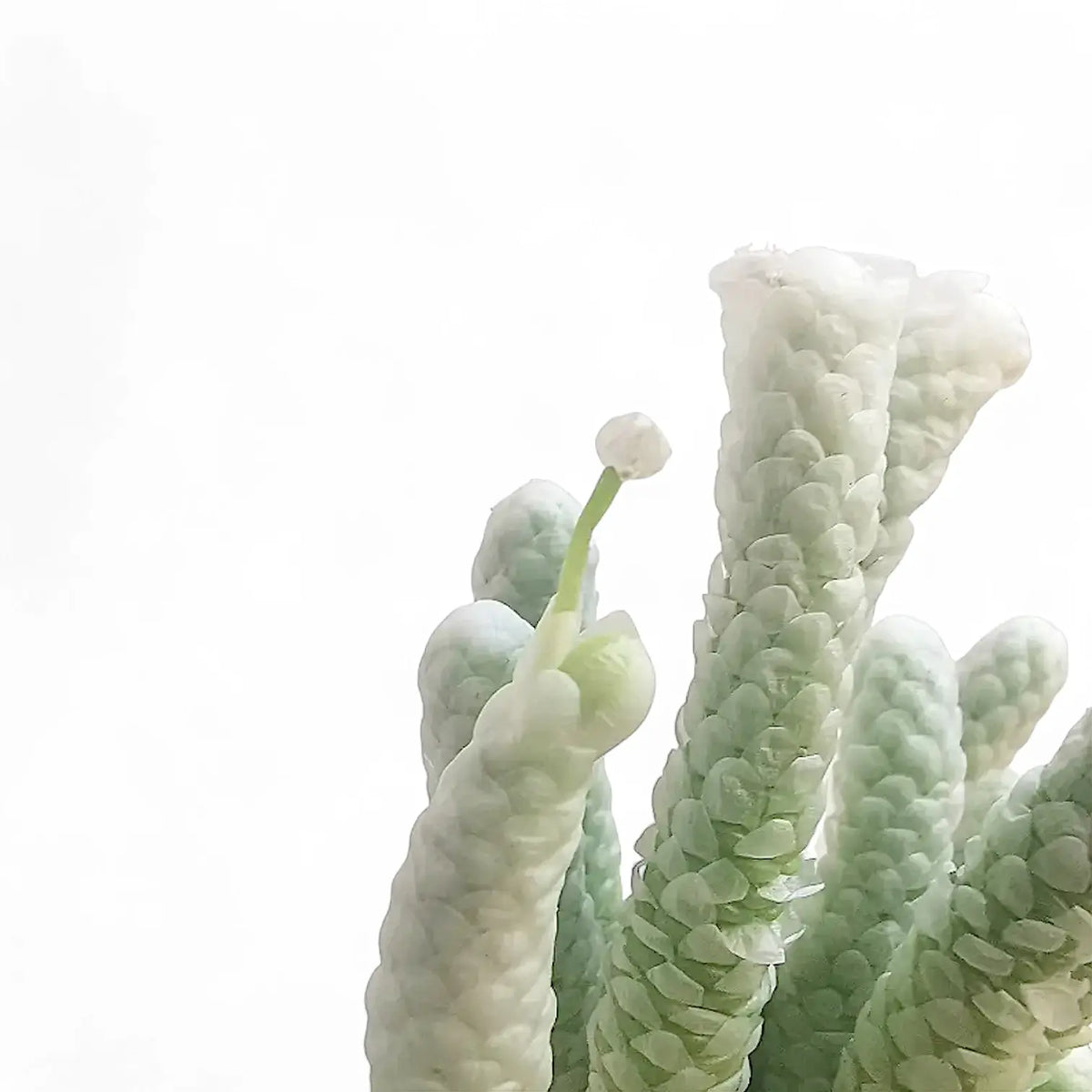
Avonia papyracea is a truly unusual succulent from the arid regions of southern Africa. What looks like a clump of tiny silver-scaled stems is actually a slow-growing plant with a swollen underground caudex and delicate green photosynthetic stems wrapped in papery white sheaths. These scales reflect sunlight and protect the plant from harsh exposure, giving it a shimmering, alien-like appearance. Tiny white flowers appear occasionally at the stem tips but the real beauty lies in its form and texture.
This species stays extremely compact and thrives with minimal care, making it ideal for collectors of miniature succulents, caudiciforms, and rare xerophytes. Subtle, sculptural, and adapted to survive extremes – it’s a desert marvel for the windowsill or greenhouse.
Distinct traits and structure
- Stem shape: Thin, erect, and covered in overlapping silvery-white scales
- Growth habit: Clumping with a subterranean caudex
- Leaf structure: Rudimentary – photosynthesis occurs through green stems
- Size: Typically stays under 10 cm in height
- Flowers: Small, white, and bloom at stem tips in warm conditions
Natural range and environmental context
Avonia papyracea is native to Namibia and South Africa, where it grows in rocky, sandy soils under intense sunlight and extreme drought. It often goes unnoticed in its habitat due to its tiny size and camouflaging scales. Rainfall in its range is low and seasonal, with temperatures ranging from 10 °C at night to over 35 °C during the day. Its white papery bracts reduce transpiration and reflect heat, allowing it to survive in exposed locations. The species is not toxic but extremely slow-growing and sensitive to overwatering.
Avonia papyracea care tips
- Light: Full sun to bright light – essential for compact growth
- Watering: Allow soil to dry completely between waterings – water sparingly
- Humidity: Prefers dry air – avoid humid environments
- Temperature: Tolerates 10 – 35 °C – avoid frost at all costs
- Soil: Extremely fast-draining mineral mix with grit, sand, and pumice
- Repotting: Rarely needed – use small, shallow pots with excellent drainage
- Fertilising: Very lightly, once per season during active growth
- Propagation: Difficult – typically by seed, as offsets are rare
- Hydroponics: Not suitable due to dry-root adaptation
- Pruning: Not required – remove spent blooms if desired
Common issues and prevention
- Rot: Caused by overwatering – always use a dry, gritty substrate
- Stretching: Indicates insufficient light – move to sunnier position
- Fungal spots: Rare but possible in humid settings – improve airflow
- Soft caudex: Sign of root rot – unpot, dry, and restart in sterile soil
- Pests: Occasionally susceptible to mealybugs – treat early with alcohol or neem
Extra notes for long-term success
Avonia papyracea prefers being ignored – overwatering is its biggest enemy. Use unglazed clay pots to improve drying time and water only during active growth (spring and summer). During cooler months, reduce watering to near zero. Its tiny size makes it ideal for grouped succulent displays, but always ensure it's not crowded by faster-growing plants. If grown from seed, patience is essential – it may take several years to form a mature clump.
Etymology and botanical naming
The genus name Avonia refers to its historic classification, which has sometimes been merged with Anacampseros. The species name papyracea means “papery,” describing the silvery, translucent scale-like bracts that cover the stems. These protect the plant and reflect sunlight, a crucial trait for surviving desert heat.
Shipping Notes
- Free Standard Shipping on $100+ Orders to the USA.
- Except Preorder products are shipped in 48 hours.
- Delivery to the USA:
- Standard Shipping : 3-10 business days
- If time is of the essence, please consider selecting expedited delivery for faster service.
Exchange/Return Notes
- We offer a 30-day return/exchange service after receiving.
- Final sale items are not eligible for returns or exchanges.
- To process your return/exchange, please contact us at [email protected]
- Please click here for more details>>> Return & Exchange Policy